The Ultimate Apartment High Rise Directory


.svg)
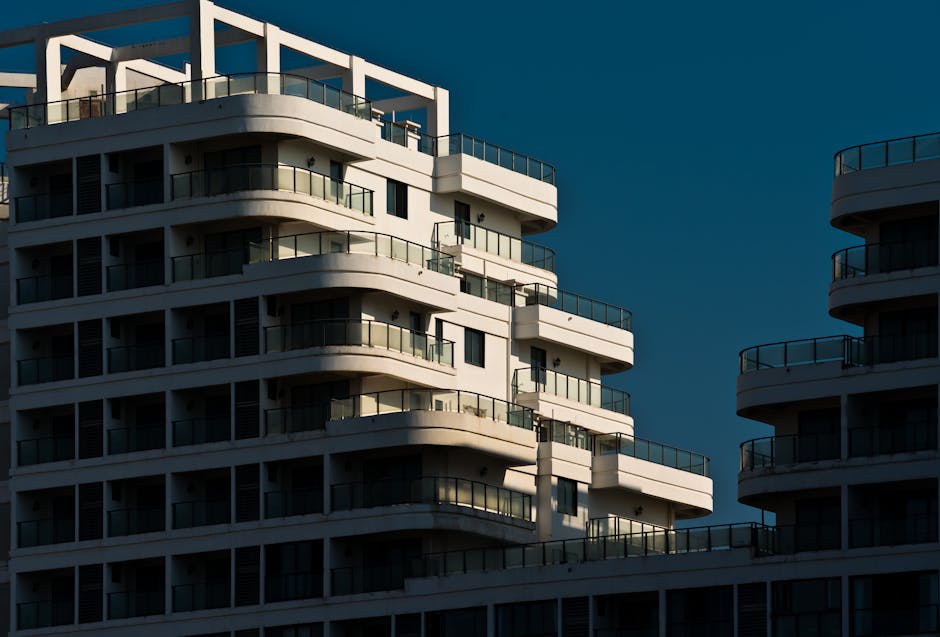
What Is an Apartment High Rise? A Quick Guide for Urban Renters
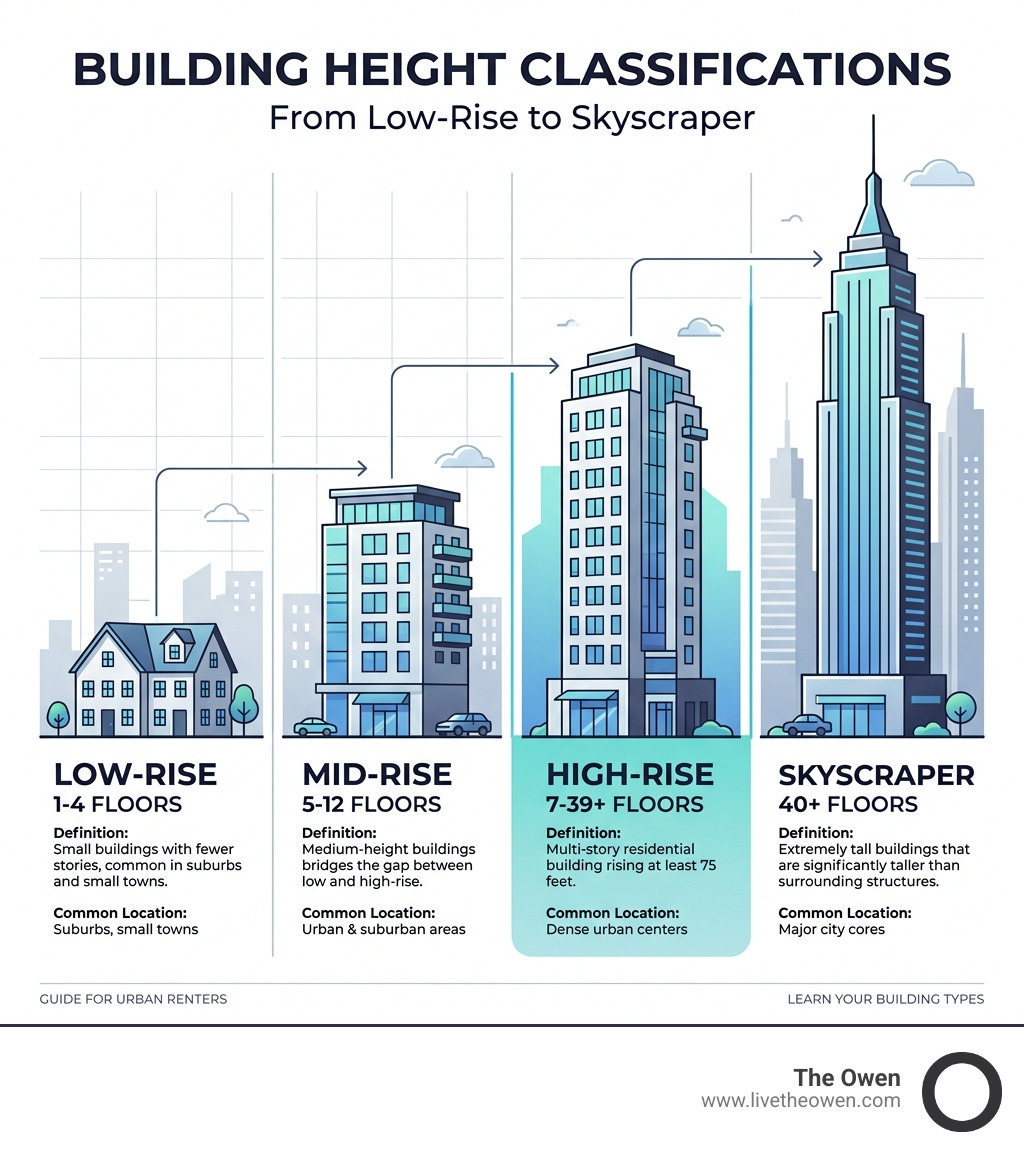
An apartment high rise is a residential building that rises at least 75 feet (roughly seven stories) from the ground — that's the standard set by the U.S. National Fire Protection Association. Some definitions go further: Emporis classifies high-rises as buildings between 12 and 39 floors.
Quick reference — high-rise apartment buildings at a glance:
| Building Type | Typical Height | Common Location |
|---|---|---|
| Low-rise | 1-4 floors | Suburbs, small towns |
| Mid-rise | 5-12 floors | Urban and suburban areas |
| High-rise | 7-39+ floors | Dense urban centers |
| Skyscraper | 40+ floors | Major city cores |
Finding the right high-rise apartment means understanding what separates a basic tower from a building designed around your lifestyle — panoramic skyline views, resort-style amenities, walkable city access, and a genuine sense of community.
This guide covers everything: how high-rises are defined, the pros and cons of vertical living, safety features, floor selection, and what modern luxury high-rise communities actually offer.
Whether you're relocating to a new city or simply ready to level up your living situation, this directory is your starting point.
Apartment high rise terms to know:
Defining the Modern Apartment High Rise

When we talk about an apartment high rise, we are looking at a structure that fundamentally changes the way we interact with urban space. In the United States, the National Fire Protection Association (NFPA) sets the benchmark at 75 feet (approximately 23 meters) or about seven stories. This height is significant because it is the point where standard fire department ladders can no longer reach the top floors from the ground, necessitating specialized internal safety systems.
However, organizations like Emporis provide a more specific range for urban planning, defining a high-rise as a structure between 35 and 100 meters tall, or roughly 12 to 39 floors. Once a building exceeds 40 stories or 150 meters, it typically graduates to "skyscraper" status.
Zoning laws play a massive role in where these buildings appear. In dense areas like San Diego, CA, high-rises are essential solutions for population density. By building vertically, developers can provide hundreds of homes on a single city block, maximizing limited land. This verticality is the backbone of High-Rise Living Excellence | The Owen, where we prioritize maximizing every square inch of the skyline for resident comfort.
The Evolution of Vertical Engineering
The history of the apartment high rise is surprisingly ancient. In the Roman Empire, residents lived in insulae, multi-story apartment blocks that sometimes reached ten stories high—though without elevators, those top-floor walks were legendary. Similarly, the city of Shibam in Yemen features mud-brick towers reaching up to 16 stories, earning it the nickname "Manhattan of the Desert."
Modern vertical living was made possible by two primary inventions: the safety elevator and reinforced concrete. Before Elisha Otis demonstrated the safety brake in the mid-19th century, living on a high floor was considered a burden. Today, it is a luxury. Steel frames and reinforced concrete cores now allow buildings like the Central Park Tower in Manhattan to reach 1,550 feet.
In May 2026, the focus has shifted toward sustainability. Modern high-rises now incorporate LEED certification and "green" features like high-efficiency HVAC systems, solar-reflective glass, and setbacks in the architecture to improve daylight transmission and reduce wind exposure at the street level.
Living Above the Clouds: Pros, Cons, and Floor Selection
Choosing an apartment high rise involves weighing the breathtaking views against the logistics of vertical density. We’ve broken down the key differences between building styles to help you decide which environment fits your rhythm.
| Feature | High-Rise (7+ Floors) | Mid-Rise (5-12 Floors) | Low-Rise (1-4 Floors) |
|---|---|---|---|
| Views | Panoramic / Skyline | Neighborhood views | Street-level / Garden |
| Amenities | Extensive (Gym, Spa, Theater) | Moderate (Pool, Lounge) | Limited or none |
| Security | Concierge / Controlled access | Key fob / Intercom | Individual entrances |
| Pace | High-energy / Urban | Balanced | Quiet / Suburban |
The primary draw for most is the skyline-view luxury apartments that only a high-rise can provide. Beyond the aesthetic, these buildings offer enhanced security protocols, on-site management, and pre-wired utilities that make moving in simpler. However, residents must account for elevator reliance—especially during peak hours—and specific moving logistics that often require booking a freight elevator in advance.
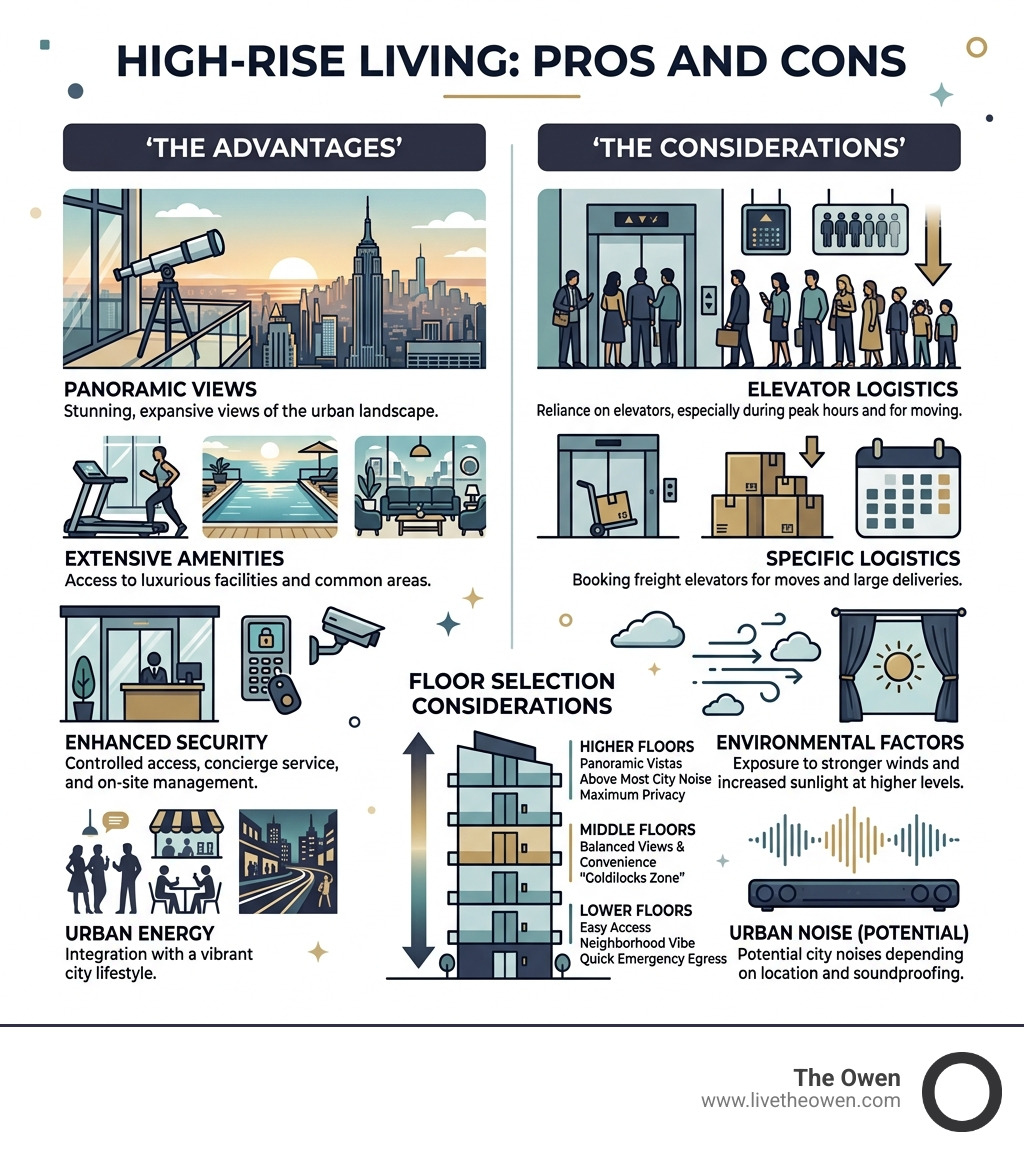
Selecting the Right Floor in an Apartment High Rise
Which floor is "best" is entirely subjective.
- Lower Floors: These are ideal for those who want easy access. If the elevators are busy or you’re coming back from a walk at North Park's local spots, you can quickly reach your door.
- Middle Floors: Often called the "Goldilocks" zone, these floors offer a balance of height for views and proximity for convenience. They are often shielded from the most intense wind exposure found at the top.
- The Penthouse/Top Floors: These units offer the ultimate in quiet and natural light. With no neighbors above you, the "pitter-patter" of footsteps is a non-issue. That top floors can sometimes have higher utility costs due to increased exposure to the elements.
Safety Features in an Apartment High Rise
Safety is the top priority in high-rise engineering. Modern buildings are designed with fortified cement cores and seismic engineering that allows the structure to move slightly during an earthquake or high winds without sustaining damage.
When touring an apartment high rise, look for these essential features:
- Fire Suppression: Comprehensive sprinkler systems and clearly marked standpipes for fire department use.
- Separate Elevator Banks: Larger buildings often have separate elevators for different floor ranges to speed up travel and emergency egress.
- Reinforced Windows & High Railings: Essential for safety on balconies, ensuring that even on the 30th floor, you feel secure.
- Emergency Power: Backup generators that keep hallway lights and at least one elevator operational during a power outage.
Premier Destinations and Modern Amenities
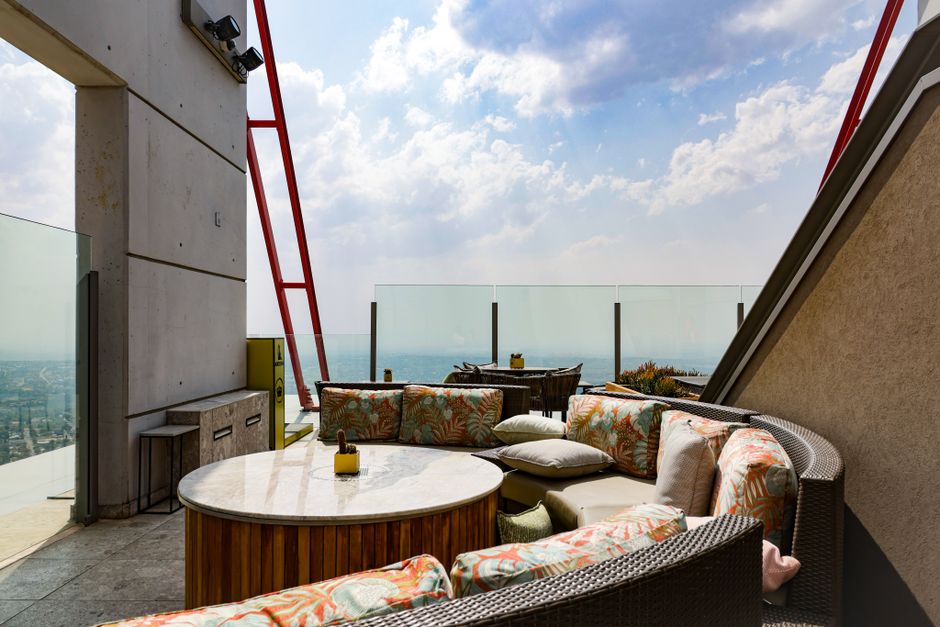
The modern apartment high rise has evolved into a self-contained ecosystem. In tech hubs and major metropolitan markets, the "luxury" label is defined by how much a building can offer without you ever having to leave the premises.
At High-Rise Lifestyle Features | The Owen, we see this trend reflected in the demand for integrated social spaces. In May 2026, the standard for luxury has moved beyond just a gym; it now encompasses a holistic lifestyle.
Modern Amenities in an Apartment High Rise
Today’s high-rise living is defined by convenience and "wow" factors. Common features in premier buildings include:
- Sky Lounges: Rooftop areas designed for entertaining with 360-degree views of the city.
- Wellness Centers: Full-scale fitness centers often accompanied by spa relaxation rooms, saunas, and steam rooms.
- Entertainment Hubs: On-site movie theaters and golf simulators provide recreation just an elevator ride away.
- Pet-Friendly Facilities: While we maintain a strict two-pet limit per apartment to ensure community comfort, we offer pet spas and grooming stations to cater to our furry residents.
- Smart Home Integration: Controlled access via smartphones, automated climate control, and high-speed fiber internet are standard.
Global High-Rise Trends
The apartment high rise looks different depending on where you are in the world.
- Hong Kong: Over 60% of residents live in high-rises, with a significant portion in public housing towers.
- Seoul, South Korea: Approximately 80% of residents live in apartment complexes, which make up nearly 98% of all recent construction.
- Toronto: This city holds the second-largest concentration of high-rise apartments in North America, trailing only New York.
- Europe: In countries like Latvia and Estonia, over 60% of the population lives in flats, often in post-war concrete blocks that are now being retrofitted with modern green features.
Frequently Asked Questions about High-Rise Living
How much do high-rise buildings sway in the wind?
It is a common myth that high-rises are perfectly rigid. In reality, structural engineering requires them to be flexible. A tall building might sway about 3 inches side-to-side on a calm day. Iconic structures like the Willis Tower can sway up to 3 feet in extreme winds! This sway is managed by fortified cement cores and is designed to be imperceptible to most residents, ensuring comfort even during a storm.
Are high-rise apartments suitable for families and pets?
Absolutely. Many modern high-rises are designed with families in mind, offering soundproofing between units and community events that foster a neighborhood feel. Regarding pets, most luxury buildings (including ours) welcome them, though we do observe a two-pet limit to maintain a clean and peaceful environment for everyone. Proximity to urban parks, like those in North Park, San Diego, makes high-rise living excellent for pet owners.
What happens in a high-rise during a power outage?
Modern high-rises are equipped with sophisticated backup systems. If the grid goes down, backup generators typically kick in within seconds to power emergency lighting, fire alarms, and at least one elevator in each bank. While your individual unit’s appliances might lose power, the building’s management communication and water pressure systems (which often rely on electric pumps) are prioritized to ensure you remain safe and comfortable.
Conclusion
The apartment high rise is more than just a tall building; it is a pinnacle of modern engineering and a gateway to a vibrant urban lifestyle. Whether you are drawn to the panoramic views, the high-end security, or the luxury of having a movie theater and golf simulator in your own building, vertical living offers a unique perspective on the city.
In the heart of North Park, San Diego, The Owen represents the future of this lifestyle. Located at 3760 Bancroft Street, our luxury residences combine the energy of San Diego with the refined comfort of a high-end home. If you are ready to experience the best of the skyline, we invite you to Discover luxury living at The Owen.

Related Posts
CONTACT US
Everything starts with hello. Fill out the form below to stay in the loop with updates on The Owen.
